People are just now learning the true reason why there are no skeletons at the Titanic wreck site
- Pilipina Flores Carandang
- Oct 14
- 2 min read

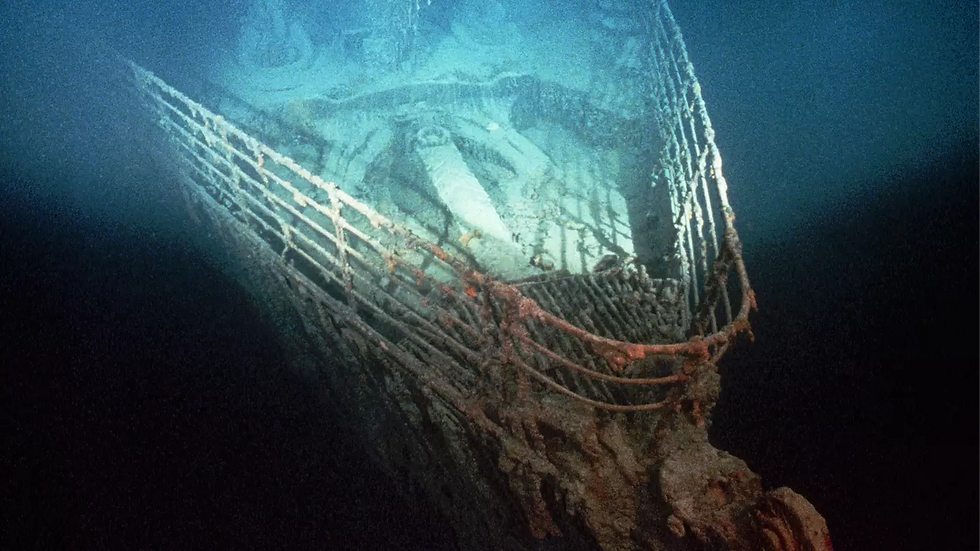
An expert explains why passenger remains cannot be found
No human remains have been discovered inside the RMS Titanic, even though approximately 1,517 people perished in the tragic disaster - and the explanation might surprise you.
Whether you're a history enthusiast, a film aficionado, or consider yourself a nauticalophile (ship-lover), the RMS Titanic's wreckage seems to captivate everyone's interest.
On its maiden voyage, the largest ocean liner of its time famously collided with an iceberg in the Atlantic Ocean, which ruptured six of its watertight compartments, surpassing the ship's design limits for survival.
The Titanic wreck, located about 325 nautical miles south-southeast off the coast of Newfoundland, is split into two main sections, about 2,000 feet apart.
The site has been visited by Academy Award-winning director James Cameron 33 times, according to CNN. Yet, the Titanic filmmaker has never encountered human remains among the furniture and lost relics.

“We’ve observed clothing and pairs of shoes, indicating that a body was likely present at one time. However, we have never encountered any human remains,” he explained to the New York Times in 2012.
Why haven’t explorers discovered any skeletons among the tragic wreckage? The answer lies in the depth where the wreck settled—12,500 feet deep in the Atlantic Ocean.
Bacteria in the deep ocean can extract nutrients from bones, leading to the removal of some passenger remains.
Another reason for the absence of skeletons is related to the chemical composition of seawater, which changes with increasing depth.
Deep-sea explorer Robert Ballard, who discovered the Titanic's wreck in 1985, explained that below a certain depth, water naturally dissolves bones.
He stated: "The water in the deep sea is undersaturated in calcium carbonate, which primarily constitutes bones.

James Cameron, the director of Titanic, mentioned he had 'never' seen skeletons despite visiting the wreckage multiple times (Paramount Pictures).
"For instance, on the Titanic and the Bismarck, these ships are situated below the calcium carbonate compensation depth. Once marine creatures consume the flesh and the bones are exposed, the bones dissolve.
"In the Black Sea, however, due to the absence of such creatures, the bones remain unexposed, resulting in perfectly mummified fossils."
A study demonstrated that placing a pig carcass, approximately the size of a human, on the seabed led to it being reduced to bones within four days, with the bones disappearing after about six months.
Therefore, it's unsurprising that after more than a century, nothing remains. This realization left internet users astonished, with some expressing their surprise on Reddit.
One user commented: "I thought they’d be squished into jelly..."
Another remarked: "Wait, since when do dead people sink?" while a third added: "The sea is human broth, confirmed?"
Although there are no skeletons on the Titanic, evidence of the passengers who once boarded remains in the form of their shoes.


Comments